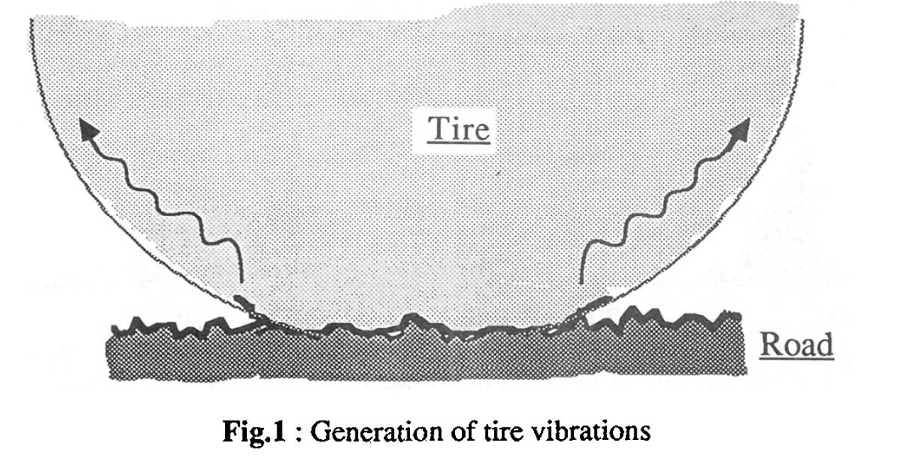
Figure 1 Tire Vibrations (Source: Pallas 1990)
This is a talk that I had prepared for the Matters of Vibration workshop that was part of the Matters of Activity research group in September 2023 and for the ECQI conference in Helsinki in January 2024.
This talk has been published open-access with the journal Science, Technology & Human Values in a thematic collection called “Noisy Knowledges”. You can find the article here.
Introduction: Is Vibration Noise?
I admit I’m a little confused. Recently on fieldwork in Paris, studying how environmental noise is known and experienced within the practices of experts, but also individuals in their everyday lives, there was an encounter that forced me to think a little differently about noise, and this talk tries to think through it a little bit.
In Paris, as the rest of Europe, the largest contributor to noise pollution is traffic. This type of noise pollution is often known and constructed through noise maps – where the “noise” is calculated through pre-given data and parameters, while also weighed according to the limits of “standard” human audibility, between 20 Hz and 20,000 Hz. As such, nothing below 20 Hz (infrasound) is included.
However, of this category of noise, the most important contributor is what is called “rolling noise,” that is, the noise that is emitted from the friction between tyre and asphalt (noise from the engine has more or less become as little as feasibly possible, I’m told). In other words, this type of noise is from traffic-induced vibrations and vibrations that are configured as noises (thus above 20 Hz).
But why do environmental noise policies and regulations not speak of vibrations as such? Is it because “vibration” happens below the limits of standard human audibility (not visible within the a-weighted decibels)? Is it because vibrations are felt and not heard?
This talk will explore these questions really without any answers; it will look at the “sense” of vibration; and will try to think with some confusions that I have.
First, I will take us to an ethnographic encounter in Paris; second, I want to quickly pass through the history of the search for a sense of vibration; and finally, I have a brief conclusion.
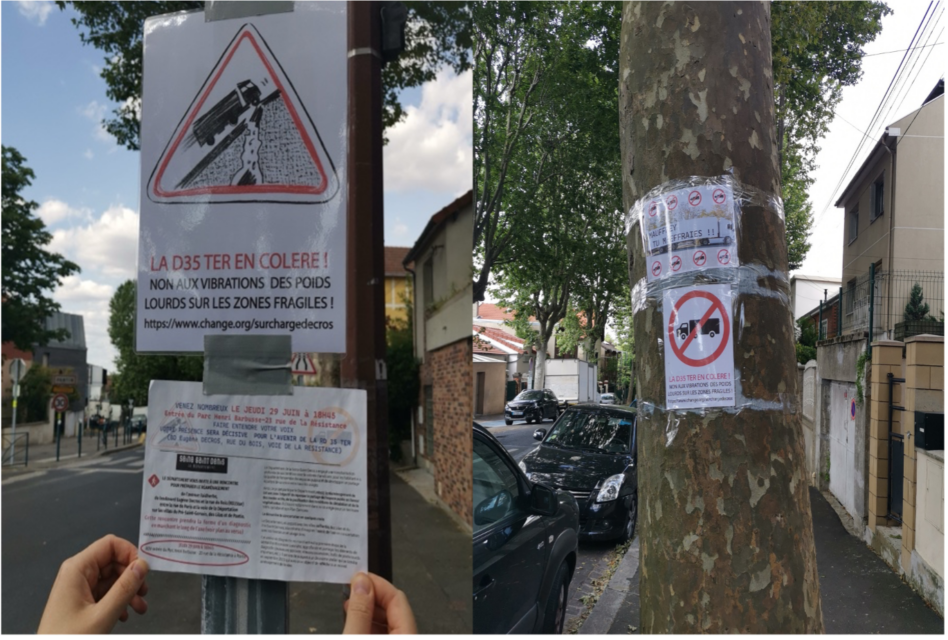
Figure 2 Protest against Vibrations (Source: Author)
A Protest Against Vibrations
In July as I was moving into my apartment on the outskirts of Paris, I came across a series of posters related to a petition and protest against vibrations. “No to the vibrations of heavy vehicles on fragile zones,” they read. What luck, I thought: a protest against vibrations on the street that I will be living on (I am in a project on Urban Vibrations, after all…). Eventually, I met the individuals behind the protest, a videographer, an artist, and an architect. We agreed to meet in the artist’s studio, which faces the street where the unwanted vibrations originate, and where they told me the story of their protest.
Their story begins with a sinkhole. The residential street that they live on had become a route for heavy-trucks, garbage trucks, transport trucks, and buses. They are constantly passing. I lived on the street, and they did indeed pass by constantly: a constant, yet intermittent, whish sound passed by my window, energy pushing its way into my apartment. What’s more, they told me, is that the street and neighbourhood is built on top of an old gypsum quarry that had been used in the Haussmanian period in Paris to build all those Haussmannian-era buildings, and the soil, the clay, that was used to fill the quarry back in had not settled yet. As a result, the vibrations from the passing heavy trucks had been disrupting the subsoil, causing water pipes to leak, the asphalt of the road to crack, and eventually, to collapse. For them, this constituted a danger, and this was their argument for their petition/protest: the accumulation of vibrations from heavy trucks had an impact on infrastructure and on the structure of their homes. Or, at least, that’s how they want to frame their argument, as Pierre, the videographer, told me:
“we’re dealing with the fragility of the geology and the fragility of the soil. It’s an argument that could still help us get rid of these lorries because ultimately there’s not much we can do. I have the impression that it would be much more complicated if we didn’t…I have a general impression that people accept [that argument]”.
Following our meeting, they took me to see Pierre’s house. They showed me the cracks in the street, in the structure of the house, and inside his home. In a poignant moment, he showed me the mirror in the front room, from which he tells me through his reflection, that he can see the vibrations every morning.
So, here, they show me how the vibrations become visible, take on form, through their effects in the materiality of the street and their home, through cracks as traces of an unseen threat.

Figure 3: Cracks of Vibrations (Source: Author)
But immanent to this are the effects of the vibrations in their everyday lives, in their well-being and bodies – cracks that are less visible, where the argument they want to make would become much more complicated. The issue with vibration, or with protesting against it, they tell me, is that it sinks into the background; it becomes part of everyday life:
“As we dug deeper,” Pierre says, “we realised that the nuisances that we sort of accepted, we realised that there were a lot of strange things, there was a lot of fatigue…And so the aim [of the petition] is that, well, I think it’s the vibrations. It’s like noise. It becomes almost unconscious”.
In the same way that there is an accumulation of truck-vibrations that renders the soil “tender”, “sensitive,” it too accumulates in their bodies. Pierre again:
“It will be important to do a study on the effect of the accumulation of micro vibrations. That is to say, when a heavy goods vehicle passes by it makes you vibrate. But we’re within a threshold: when 150 of them go by and cause vibrations – what effect do these micro-vibrations have? […] It sounds sustainable, but in fact it’s micro-information, it’s micro-stress, too”.
According to them, it is the “unconscious” relation to vibration, that it’s micro, below visibility, outside of standard perceptibility, that makes it so difficult to relate to, that would, in the end, complicate their argument.
And Pierre confided to me, with some disappointment, that often close family members do not really understand; that they, even in the same house, do not “feel” the vibrations that he feels; and wonder why he is changing everyday patterns, like sleeping in another room. There are also other members of their petition that do not feel the vibrations either; and, while I heard the noise, I did not feel the vibrations – or, at least, not consciously.
(I even did a contact mic experiment to try to experience them, but it failed…)
And so: what does it mean to actually sense vibrations as vibrations and not as noise?
Here is how he describes the sensation of vibrations from the passing trucks:
“I feel them physically. I feel the walls start to shake and little noises, really. Like an earthquake. A little earthquake. And all of a sudden you feel yourself, you feel that everything is moving around you, the ground and – so my entire self vibrates with micro-noises, but from a little bit everywhere in the house, which is incredibly distressing”.
In our conversation, there is often this blurring of the senses: vibrations are felt physically as “micro-noises” – as if both hearing and feeling merge together through vibrations, as if it is the skin that hears the noise.
So, two confusions: between vibration and noise, and between hearing and touch, or the ear and the body. Indeed, Pierre and the others tell me, there is already a double-ness to vibration. Here is an article they shared with me that shows that vibrations are both airborne and ground-borne; and they are both heard through the air and felt through stuff, micro-noises that shake his milieu, his home and his body.
We can follow this doubleness throughout the history of the search for a sense of vibration. I will now quickly turn to this – not as a way to clarify the ethnographic encounter or provide explanations – but just to redouble it or set it in oscillation.
History of Sense of Vibration: a world that shakes
In the late 19th century and beginning of the 20th century, psychologists and other scientists began a search for the sense of vibration – a sixth sense – what’s called “pallesthesia,” which comes from the Greek “to shake” (or to quiver). The study of shaking, or the study of the sense of shaking, of how the shaking of the external world shakes the body and is felt, a resonance between body and environment.
The ecological psychologist J.J. Gibson in a chapter called “Compression Waves from a Vibratory Event” provides us with a good description of this world that shakes:
“Whether this vibration [compression waves in the air] is to be called sound, with subjective connotations, or merely, shaking, with physical connotations need not confuse us if we keep in mind that vibration is only potentially stimulating for an organism. Whether or not it is effective depends on the receptive equipment of the animal.” (16).
And in this quote, Gibson is saying that we live in a world that vibrates excessively; we are surrounded by them but most of the time we do not sense them. Vibrations are potentially sensible: we just need the right receptors or senses to pick up information about them.
Where do the protesters fit in this? Have they learnt to sense vibrations that have otherwise sunk into the background, that are otherwise only potential, that do not fit within the category of “sound” or “noise” because they are not “heard” within the standardised regime of human hearing.
Touching Hearing
This encounter with the protest and petition drew me into this strange and fascinating history of the search for the “sense of vibration” that began in the late 19th century at a time when vibrations were proliferating, with the advent of railways, automobiles, mechanical factory equipment, weapons, the telephone, radio, etc. when the increasingly vibrating world became ever-more apparent (or as David Katz, one of the protagonists in this history wrote, “Once attention is paid to this type of phenomenon, one discovers that ours is not only a resounding world, but also, in great measure, a vibrating world” (1925: 204-5)). But this also created a problem for the neurophysiologists and sensory psychologists that they sought to clarify: where does the sense of vibration fit within the 5 senses? Are sensations of vibration connected to touch or hearing? Does it constitute its own sense? Is there a specific sensory organ for vibration? How do human (and nonhuman) bodies relate to the vibrating world? It, in other words, confused –and still confuses – a common-sense view of the organisation of the body and sensation.
The search for this sense began in earnest in 1899 with Victor Egger, a French psychologist, who was interested in the effect that the repetitive shocks from machinery had on the body. To study this, he utilised a tuning fork test – a still common procedure in clinical studies – that showed to him that vibratory sensations continued long after the sensation of touch, and he argued that these sensations passed through the bones – they were “bony feelings”.
This was accepted until the 1920s when the so-called “controversy” between David Katz and Max von Frey happened. To make a long story short: von Frey argued (after a series of tickles, probes, pokes, and stretches of the skin of himself and others) that there is no separate sense of vibration: it is just a sub-species of the sense of pressure in the skin. In this way, he sought to harness the senses back together and to re-establish Müller’s “law of specific nerve energies,” the doctrine that there is a specific nerve energy to each sense (or neural pathway). In his book, The World of Touch, published in 1925, the psychologist / phenomenologist David Katz argued the contrary. [1] Drawing from his own experiments with tuning forks, of studies with “deaf-mutes” (of course, this is a historical term that has been rightly contested in disability and deaf studies) who were shown to be able to understand speech and music through vibrations in their body (notably the chest), and experiments with animals, spiders, cats, fish, and frogs, he claimed that there is indeed a separate sense of vibration, it is independent from touch. Or, that vibration was a separate sensory modality separate from pressure.
(While for von Frey, touch included specific nerve energies of pressure, pain, warmth and cold, and that vibration was part of pressure; for Katz, vibration had its own specific nerve energy in contradistinction of Müller’s laws because while it was a separate nerve energy that did not require its own sensory organ – the skin can transmit both vibratory and pressure sensations simultaneously and independently).
But I guess what is most interesting for me is that Katz makes this argument largely based on the proximity (and not by drawing them apart) that he draws between the sense of vibration and hearing, or tactile and auditory sensations. For him, like hearing, the sense of vibration is a distal-sense: you can sense vibrations from afar (for instance, you can sense an incoming train through its vibrations); and like hearing, there is a temporal duration to the sense of vibration: it is like hearing a tone, a pulsing, sensing a movement; they both have an “oscillatory form of stimulation” – the shakes. In other words, for Katz and others, vibration blurs together hearing and touch. He also includes this admission in his book,
“Undoubtedly, these touching noises as well as other acoustical impressions, usually help us develop our image of the touchable world. We excluded the acoustical aspect from our experiments as a source of “error” […]. It turned out that there was more to such statements than it had seemed at first […]. I have established that there almost invariably are accompanying vibration sensations that also have a role in the tactual accomplishment. These vibration sensations are closely related in many respects to acoustical sensations, so that occasionally the two types of sensations may indeed be confused”.
The sense of vibration in other words confuses the sensation of touch and hearing – creating a sense of synthaesthesia.
At the same time, then, that the sense of vibration troubles the conventional way of organising sensation in the body, it also, in Katz’s words, opens up a “stage of speculation” vis-à-vis sensation. He writes that the sense of vibration points to a “great profusion of nervous elements in the skin [that] almost requires that even more senses be distinguished” – reminding us, to follow the philosopher Gilles Deleuze, that we do not yet know what a body can do (and expanding what we understand as “sensation” away from the limited model of sensation based on the 5 senses).
I’ll now make a couple large historical jumps…
Alongside the psychophysics, sensory psychological studies of how perception happens at a very micro level, there were studies that searched for how the body is in “tune” with the environment through receptors, or what Katz called the “profusion of nervous elements in the skin” – and 4 mechanoreceptors or “biological transducers” were located – two of which receive and convert energy from vibrations into sensory information that travels to the brain as signals/messages. With help from information theory, the body, in this research, became an input-output machine, vibrations into signals into messages. And they often use the image of how the body becomes “tuned” to the world through little microphones in the skin.
One of these transducers is the Pacinian corpuscle, which is sensitive to higher frequencies, and another is Meissner corpuscles for lower frequencies. And what I find interesting is that while scientists continue to locate clear and distinct receptors for registering vibration, they continue to blur with the sense of hearing. And here I will end with some more sensory confusion.
There was a study published in Nature in 2019 that studied what happens in the brains of mice when their paws are stimulated with vibrations, and, here I’ll quote, “they discovered that neurons in the somatosensory cortex are activated in a manner similar to those in the sound-reactive auditory cortex”. In other words, again a quote, “despite the fact that sounds – which travel through the air – and vibrations – which are transmitted through solid matter – are processed by different sensory channels, they are both perceived and encoded similarly in the brain”. And again, they write, “Could it be that the particular distribution of vibration-sensitive mechanoreceptors along the bones of the forelimb acts as a seismograph to “listen” to vibrations? [………] This somewhat vestigial, yet highly sensitive modality might also explain how we are able to identify subtle clues linked to upcoming natural disasters, or why [to bring us back to the petition we began with] construction or traffic causes nuisances even when inaudible”. [2]
In other words, the sense of vibration continues to create sensory “zones of indistinction,” blurring hearing and touch, while also drawing us into the “potentiality” that vibration constitutes for other ways of sensing and knowing beyond the so-called five senses. Sensory confusions today have moved somewhat from the skin to the brain, in different models of sense-making from transduction to computation…
Conclusion: “Who is Afraid of Confusion?”
I want to conclude briefly with a reflection on a resonance between the scientific studies of the sense of vibration and this small protest in Paris. They both are – in their own ways – seeking ways to make sense of the “micro-information” of vibrations. For example, the scientific studies often begin with lists of fleeting impressions of mechanical disturbances: “the flutter of an insect’s wings, a warm breeze, a blunt object, raindrops, and [strangely, perhaps] a mother’s gentle caress”, and then seek to explain how these little perceptions work in the body, how meaning is made of them. The protest in Paris was also dealing with this issue: of how to make the unconscious, micro-information of vibrations, the micro-noises, relatable, or of making others — politicians, e.g. — sensitive to them. And aside from the political consequences of this — of contesting established “regimes of perceptibility” (Murphy 2006), of what is sensible or not — it also takes us into a classic philosophical problem: of what Leibniz called the unconscious, little perceptions of the sensible – or what was indeed called confusion – and of how to make clear ideas from the confused sensible world. [3]
The French philosopher Michel Serres is also interested in this in his book on the five senses (2008). However, Serres contests the longstanding fear of confusion in Western thought, and in contrast to analysis, which seeks to divide and separate to create clear and distinct knowledge, proposes a “philosophy of confusion” — of mixtures, continuous varieties, and interferences. And with Serres, I think vibrations can make us ask the question of the epistemic/methodological value of confusion as such (& not as a source for analysis), and if our senses can mislead us, what does this tell us of the world?
I’m interested in how we keep this confusion together without resolving it – in our writing, in our research, and what, in the words of Marisol de la Cadena (2021), “onto-epistemic openings” confusions constitute…
References:
De la Cadena, Marisol. “Not Knowing: In the Presence of…” In Experimenting with Ethnography: A Companion to Analysis, edited by Andrea Ballestero and Brit Ross Winthereik. Durham: Duke University Press, 2021. 246-255.
Gibson, James J. The Senses Considered as Perceptual Systems. London: George Allen & Unwin Ltd., 1966.
Katz, David. The World of Touch. Translated by Lester E. Kreuger. New Jersey: Lawrence Erlbaum Associates, Publishers, 1989 [1925].
Murphy, Michelle. Sick Building Syndrome and the Problem of Uncertainty: Environmental Politics, Technoscience and Women Workers. Durham: Duke University Press, 2006.
Pallas, M.A. “Tired-Road Noise: An Analysis of Tire Vibrations.” Colloque C2 supplément au no 2, Tome 51 (1990): C2-785 – C2-788.
Serres, Michel. The Five Senses: A Philosophy of Mingled Bodies (I). Translated by Margaret Sankey and Peter Cowley. UK: Continuum, 2008.